
Supplement Habits
Vitamin D and Magnesium in the Active Man's Morning Routine
Marcus Webb · 14 January 2026
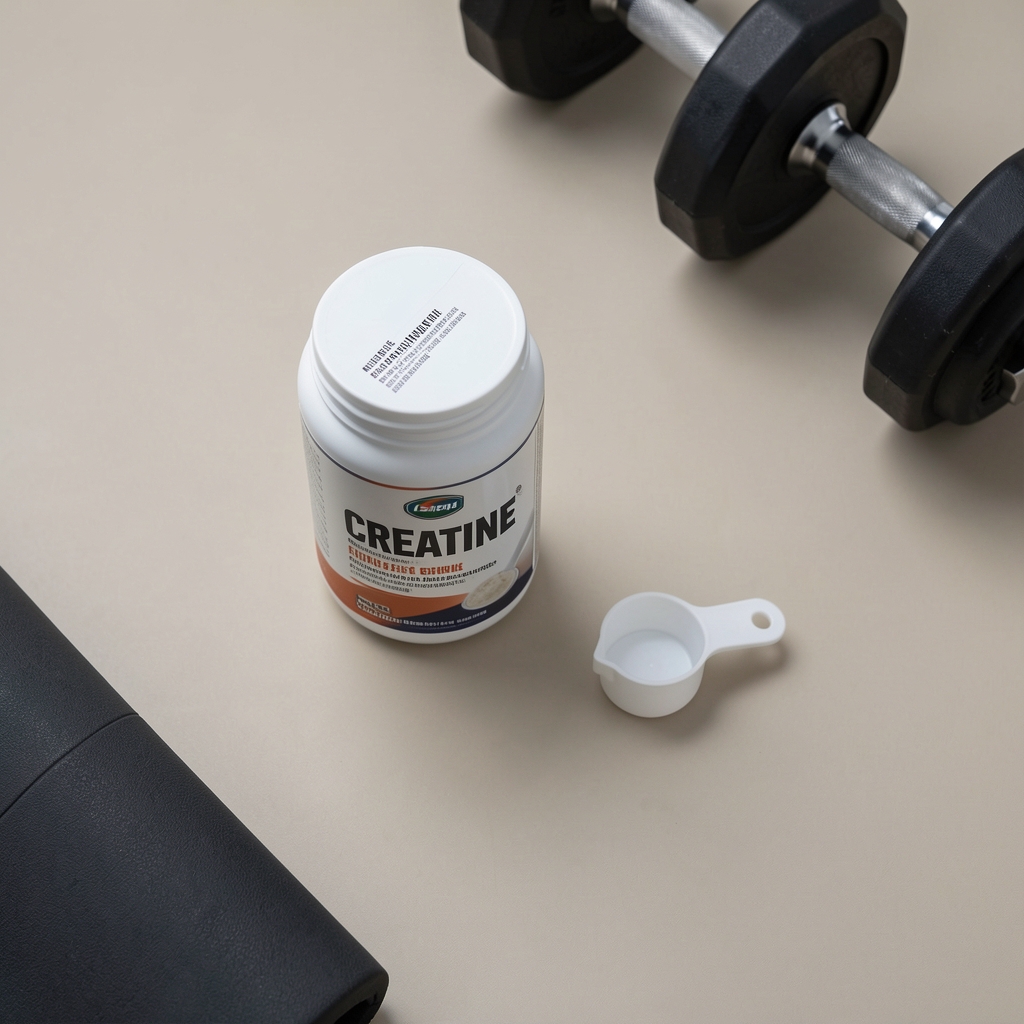
Creatine occupies a distinct position in the landscape of men's supplementation: it is one of the most extensively researched performance-adjacent nutritional substances available, and simultaneously one of the most poorly represented in popular wellness media. The volume of published nutritional literature examining creatine's relationship with physical output over time is substantial. The task of this review is to draw from that record without overclaiming, and without reducing a complex body of research to promotional shorthand.
Creatine is a naturally occurring compound found primarily in skeletal muscle, synthesised in the liver, kidneys, and pancreas from amino acids — specifically arginine, glycine, and methionine. It is also obtained through diet, with red meat and fish representing the primary dietary sources. A man who consumes red meat three to four times a week will obtain a meaningful quantity of creatine from food alone; a man whose diet is predominantly plant-based will obtain substantially less.
The supplemented form — typically creatine monohydrate — has the same molecular profile as endogenously produced creatine. It is not a novel substance; it is an additional quantity of something the body already makes and uses. This distinction is editorially important because it frames creatine supplementation in its correct nutritional context: not as an exotic enhancement, but as a dietary addition that raises the total quantity of a substance with a known and well-documented role in energy availability during high-intensity physical effort.
The body stores creatine primarily as phosphocreatine, concentrated in muscle tissue. This stored form plays a role in the rapid resynthesis of ATP — adenosine triphosphate — during short bursts of high-intensity activity. This is the mechanism that makes creatine supplementation practically relevant for men engaged in resistance training: the energy system under demand during heavy lifting or sprint-interval work draws on phosphocreatine stores, and a higher store availability may support a greater capacity for that kind of effort over time.
The published nutritional literature on creatine monohydrate represents several decades of accumulated research conducted across diverse populations. The observations that emerge from this literature — stripped of promotional framing — can be summarised with reasonable precision.
Creatine supplementation supports physical output over time in resistance training routines. This is the observation that appears most consistently across published studies. Men who supplement with creatine monohydrate while following a structured resistance training programme tend to show greater improvements in training volume over time — more repetitions at a given load, across a greater number of sets — compared to those following the same training without creatine supplementation.
An increase in lean body mass is also a consistent observation in the research record, though the mechanism is not primarily one of muscle protein synthesis directly stimulated by creatine. The increase appears to reflect a combination of factors: increased training capacity leading to a greater training stimulus, and an osmotic effect in muscle tissue that increases cellular hydration. The practical outcome — greater lean mass over time for men following a consistent training programme — is well-documented regardless of the precise mechanistic pathway.
It is worth noting what the research does not consistently support. Claims that creatine produces dramatic physical changes independent of structured training, or that it functions as a rapid body composition adjuster, are not supported by the record. Creatine supports physical output over time; it does not replace the training programme that determines how that output translates into physical adaptation.
"Creatine supports physical output over time in resistance training routines. The training programme, not the supplement, remains the primary variable."
The published literature has examined two broad approaches to creatine supplementation: a loading phase followed by a maintenance phase, and a consistent lower daily intake without a loading phase. Both approaches appear to result in similar muscle creatine saturation over time, with the primary difference being the speed at which saturation is achieved.
The loading approach — higher daily intake for a defined period, typically one to two weeks, followed by a lower maintenance intake — reaches creatine saturation more rapidly. The consistent lower daily approach reaches the same saturation point but over a longer period, typically three to four weeks. For men whose priority is practical simplicity and routine integration, the consistent daily approach is the more common choice, and its practical outcome is equivalent over the medium term.
What the Almanac observes anecdotally across the men whose habits have been documented through this publication is that dosing regularity — taking creatine consistently each day, integrated into a fixed morning or post-training routine — is a more significant predictor of sustained supplementation than the specific protocol followed. A man who takes a lower daily intake for twelve months without missing days has a different supplementation profile than one who follows a theoretically optimal loading protocol with irregular compliance.

For men who maintain a daily supplement routine, creatine typically sits alongside rather than in competition with other nutritional priorities. The standard daily supplement stack for an active man engaged in regular resistance training might include a protein source — often a whey protein, occasionally a plant-based alternative — alongside creatine, and potentially one or two micronutrient additions depending on observed dietary gaps.
The question of creatine's interaction with protein intake is a practical one that surfaces frequently in the editorial correspondence of this publication. The published record notes that creatine's primary role — phosphocreatine store availability for high-intensity effort — is mechanistically distinct from protein's primary role in post-exercise muscle protein synthesis. They operate through different pathways and address different aspects of the physical training and recovery process. A man supplementing both creatine and protein is not duplicating effort; he is addressing two distinct aspects of his nutritional support structure.
Stacking creatine with B vitamins — particularly B6 and B12, which contribute to daily focus and energy awareness — is a pattern that appears in the men's wellness space but has less direct research support for synergistic effect. The Almanac's editorial position is that each constituent in a supplement stack should be present for a specific and evidence-informed reason, not as part of an increasingly elaborate ensemble whose practical value diminishes with each addition.
Creatine supplementation is most relevant — and its published research base most applicable — for men engaged in structured resistance training on a regular basis. The energy system that creatine supports is the one under greatest demand during repeated bouts of high-intensity muscular effort. Men whose primary physical activity is endurance-focused — long-distance running, cycling, swimming — may find the published evidence base for creatine less directly applicable to their training context.
For men in Jakarta and across the wider Asia-Pacific region, whose training practices often blend gym-based resistance work with martial arts, sport, and outdoor activity, the contextual applicability of creatine supplementation depends on the proportion of weekly activity that involves high-intensity effort. A man whose week includes three sessions of resistance training and two of endurance activity has a different creatine context than one whose week is exclusively endurance-focused.
The Almanac notes that creatine's research record is specific to the energy system involved in brief, high-intensity effort. It is not a general-purpose performance supplement; it is a specific nutritional support for a specific type of physical demand. Understanding that specificity is the beginning of deciding whether it belongs in a given man's daily stack — and that decision belongs with the individual and, where specific concerns arise, with a qualified wellness professional.
Articles published on Arumon Almanac are editorial in nature and reflect the writers' observations on everyday supplementation habits and nutritional awareness for active men. The content is not intended as professional advice, nor as guidance for the management of any specific condition. Readers with specific concerns about their daily routines are encouraged to speak with a qualified wellness professional.

Adrian Lim is a contributing editor at Arumon Almanac with a focus on supplement research review and men's nutritional habits. His writing draws on published nutritional literature and direct correspondence with active men across Southeast Asia.
More from this author